

Fatimid Gold
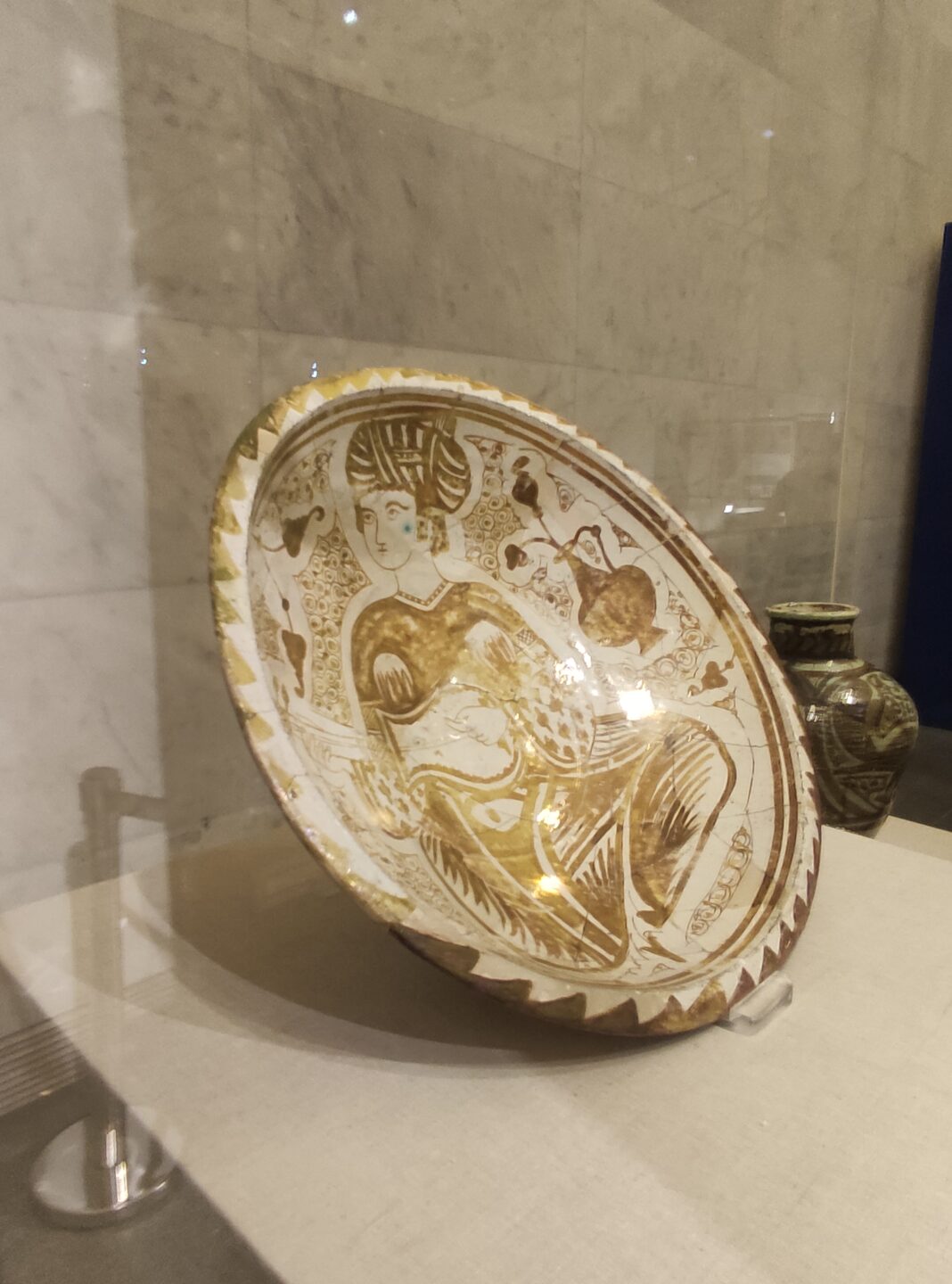
Photo courtesy of the author
The COLOR CODEX series — to which SEMIOVOX has invited 50 of our commercial / applied semiotician colleagues from around the world to contribute — explores the unexpected associations evoked for each of us by specific colors found in the material world. Vol. 1: 2023–24. Vol. 2: 2026–27.
The Fatimid Caliphate was an Ismaili Islamic empire that ruled North Africa, Sicily, and the Middle East from 909 to 1171. The Fatimids traded with regions around the known world and amassed their wealth in Al-Qahira (“The Triumphant”), which is to say in Cairo… where I was born and raised.
The presence of the color gold in the Fatimid visual culture (e.g., ceramics, textiles, rock crystal, architectural ornaments) with which I was surrounded as a child foregrounds a communicative function, mediating between the material and the symbolic. It says, for one thing, We are affluent. But that’s not the only thing the gold says in these works. The Muslim faith also makes an appearance in Fatimid art — iconically, by evoking paradise, fertility, and divine blessing, resonating with Qur’anic imagery while indexing the Nile, agriculture, abundance. Fatimid artisans’ use of figurative imagery in soft, luminous palettes challenges our assumptions about Islamic art. Color transforms human and and animal bodies into signs that depict life styles; this is a surprising departure from older Islamic customs prohibiting the extravagant use of materials and depictions of animate creatures.
The 11th-century Fatimid lustre painted dish shown here, a favorite object of mine from the Museum of Islamic Art in Cairo, leverages the visual and symbolic qualities of gold. It depicts a seated lady playing a stringed instrument. She wears a long garment with wide sleeves, adorned with bands and cross-shaped motifs. The folds of the garment at the legs are decorated with Fatimid motifs. She wears a toque resembling a turban — from beneath which locks of hair appear on either side of her face, with short hair visible at the back of her neck. The dish itself isn’t made of gold; but its golden paint aligns the dish with the precious metal.
The trappings of wealth and prestige, here, aren’t the whole story. When I look at this luminous craft work, I think not only of this Muslim woman’s luxurious life style, but of the divine. In Islamic art, which cannot depict God in any physical or anthropomorphic form, gold is often used to symbolize the divine light, purity and the transcendent nature of God’s word. Fatimid works like this one deploy the color gold as a semiotic bridge between faith and everyday life, between sacred meaning and sensory pleasure. The Fatimid elites’ way of life, which sought pleasure (via gardens, feasts, music, poetry, eroticism, etc.) rather than constraints, while simultaneously reflecting the dynasty’s Ismaili beliefs, is celebrated in such works.
COLOR CODEX: Martha Arango (Sweden) on FALUKORV RED | Rachel Lawes (England) on DEVIL GREEN | Audrey Bartis (France) on KYOTO MOSS | Maciej Biedziński (Poland) on SKIN-DEEP ORANGE | Natasha Delliston (England) on MARRAKECH MINT | Whitney Dunlap-Fowler (USA) on RESURRECTION CANARY BLUE | Ximena Tobi (Argentina) on VILLA MISERIA BRICK | Aiyana Gunjan (India) on LETTERBOX RED | Lucia Laurent-Neva (England) on TEAL BLUE VOYAGER | Charles Leech (Canada) on STORMTROOPER WHITE | William Liu (China) on PINING GREEN | Ramona Lyons (USA) on GOTH PURPLE | Greg Rowland (England) on LAUNDROMAT FUTURA | Sónia Marques (Portugal) on RUNAWAY BURRO | Max Matus (Mexico) on CALIFORNIAN BLUE | Chirag Mediratta (Canada / India) on AUROVILLE ORANGE | Alfredo Troncoso (Mexico) on BORGES GLAUQUE | Josh Glenn (USA) on TOLKIEN GREEN | Clio Meurer (Brazil) on PARIS LUMINOUS GREY | Serdar Paktin (Turkey / England) on AMBIENT AMBER | Maria Papanthymou (Russia / Greece) on AGALMATOLITE WHITE | Sarah Johnson (Canada) on ARMY GREEN | Vijay Parthasarathy (USA) on ALPHONSO YELLOW | Tim Spencer (England) on ELECTRO-EROTIC COBALT | Adelina Vaca (Mexico) on MEXICAN PINK | Brian Khumalo (South Africa / USA) on STATUE OF LIBERTY TEAL | Madoka Suganuma (Japan) on BLOSSOM PINK | Susan Bell (Australia) on THAILAND TURQUOISE | Rajan Luthra (India) on AMALTAS YELLOW | Carla Moss (Austria) on EASTERN BLOC GREY | Dora Jurd de Girancourt (France) on JACARANDA PURPLE | Alexandra Ncube (England) on PMDD RED | Katrin Horn (Austria) on PIER BLUE | Ľudmila Lackova Bennett (Czech Republic) on BARBIE PINK | Onaiza Drabu (India) on MOHARRAM BLACK | Jiakun Wang (China) on GEN Z PURPLE | Manar R. El Wahsh (Canada) on FATIMID GOLD | Gianlluca Simi (Brazil) on TECH BLUE | Gemma Jones (Netherlands) on IN-BETWEEN INDIGO | Mariane Cara (Brazil) on IPANEMA GOLDGLOW | Su Luo (China) on CHILLI OIL RED | Jamin Pelkey (Canada) on TBD | Cathy Maisano (Australia) on TBD | Hyaesook Yang (South Korea) on TBD | TBD on TBD | Eugene Gorny (Thailand) on FLAMBOYANT RED | Elinor Lifshitz (Switzerland) on BAMBOO GREEN | Nimesh Nambiar (UAE) on DUBAI DUNES | Iván Islas (Mexico) on MITLA YELLOW | Victoria Gerstman (Scotland) on CALPOL PURPLE.
Also see these global semio series: MAKING SENSE (Q&As) | SEMIOFEST SESSIONS (monthly mini-conferences) | COVID CODES | SEMIO OBJECTS | COLOR CODEX | DECODER (fictional semioticians) | CASE FILE | PHOTO OP | MEDIA DIET | TATTOO YOU (semioticians’ tattoos).